


A Quick Guide to Owning and Flying Light Helicopters
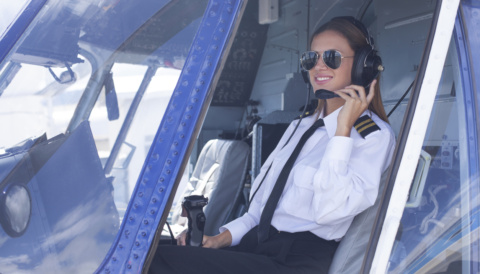
A visit to RotorTechUK in June could be ideal if you are learning to fly, or if already a pilot, planning to buy or upgrade an aircraft.
RotorTechUK 2023, to be held at Sywell Aerodrome, 8th – 10th of June, will be the ideal place to see helicopters you could possibly buy — from a two seat piston-engined example through to a twin-turbine, depending on your ambitions and resources! There will also be a comprehensive line up of providers of avionics, equipment, accessories and third-party services, along with training providers with some leading flight schools also exhibiting and presenting in seminar sessions.
A full list of Providers/Suppliers, what they specialise in, and a comprehensive Seminar Programme, will be published prior to the Event.
Owning A Helicopter
While some people learn to fly before buying an aircraft, others choose to buy either a share in a group aircraft or own one outright — and this can be ‘factory new’ or used. Furthermore, there is the possibility of financing an aircraft along with considering other costs such as training, insurance, and ongoing maintenance.
At RotorTechUK you will be able to meet service providers that can advise on these various aspects and both manufacturers and aircraft brokers who have considerable experience in advising would-be aircraft owners and pilots.
And, last-but-not-least, there are associations such as the BHA (British Helicopter Association) on hand to help. And if you want to go one step further and have your own helipad and hangar, why not talk to the General Aviation Awareness Council (GAAC) or a company such as Jewers, respectively.
Also use the occasion to see existing helicopter owners flying in for the event — the variety can be daunting for those new to light (‘general’) aviation and private flying, but people are invariably friendly and enthusiastic and willing to provide advice.
How Much Does an Aircraft Cost?
A second-hand helicopter could cost as little as £50,000 (you can buy from anywhere in the world, of course, but would have to re-register it in the UK under the ‘G-Reg’). But it could cost up to £2,000,000 and beyond if you wanted to buy something more sophisticated such as a single- or twin-turbine. But the top-end for new piston-engine helicopter tends to be around £500,000, and many will be less than £150,000.
So many buyers will look for second-hand (‘used’) aircraft — and aircraft do have very long lives. Some are 50+ years old and still going strong, as long as they’ve been well maintained. Some have been lovingly restored, and these range from light trainers to examples with a past military history.
If you wanted to purchase an aircraft for training and touring once you have your PPL(H), you could follow a well-trodden path and buy a used Robinson R22 or Guimbal G2. These are both two-seat aircraft with an endurance of 2-3 hours at around 90 knots (105 mph) and a one in reasonable condition with ‘Fresh Annual’ maintenance certificate will typically set you back £90-150,000. Insurance could be £6,000 a year (premiums have been increasing) and maintenance perhaps £12,000 a year assuming you put a little into a maintenance fund too. You never know, you may have an unexpected failure of something in the engine that needs replacing, that you can’t claim for under insurance or a warranty.
For the above reasons many choose to go for a slightly more expensive second-hand aircraft with finance through a finance provider such as Close Brothers. Another option is to buy a share in a helicopter — just make sure you do your homework on the particular aircraft and the how well it has been managed. It is usual to have a Pre-Purchase Inspection of an aircraft you are considering purchasing, just like having a survey on a house before you exchange contracts.
Learning to Fly
The chances are, if you want to buy an aircraft one day you’ve probably had a trial flight at a flight school — the first step in a fascinating and exhilarating hobby (that for some turns into a profession!) Alternatively, your first flight might have been with a family member or family friend who owns an aircraft, or in the Air Cadets.
For many the first step is the Private Pilot’s Licence for Helicopters (PPLH) and any flight school at RotorTechUK or at any airfield you call into will be able to explain what’s involved. It takes commitment, of course, and finances — think £20,000 including a minimum 45 hours of flying, 9 short exams (which you can do at the flight school), a practical flying ‘Skill Test’ and a ‘radiotelephony’ (RT) test. What you get at the end on your licence is the approval to fly the specific helicopter type you have learned on.
Typical training helicopters at UK flying schools range are Robinson R22s and R44s or the Guimbal G2 Cabri.
Once you have your licence you can add other ratings — perhaps a night rating — but most people just want to try out their hard-won licence visiting a few UK airfields, hotels and friends’ back gardens first.
Many years ago it was ‘cheap and easy’ to go to the USA to fly, and the weather was often more reliable too somewhere like Florida or California, but post 9-11 security requirements, increasing fuel costs in the US and a less favourable dollar exchange rate makes it doubtful whether your flight and hotel costs are worth it. In addition, most instructors would advise you to learn to fly where you plan to fly, as there are differences in approach and regulations, airspace and so on.
Prior to EASA and the UK CAA finalising their divorce on 31 December 2022 there were also options to gain an UK licence in southern Europe, such as Balearic Helicopters at Son
Bonet aerodrome in Mallorca. However, the separation into two authorities has meant that, in all practical terms, that option should now be discounted.
Where Can I Fly?
With licence in hand, you may want to fly with friends or family to one of the numerous small airfields in the UK or go beyond to Ireland or mainland Europe (not forgetting the Isle of Man and the Channel Islands!)
For most airfields you will call for permission (so-called PPR, or Prior Permission Required). You will do your planning, from checking the weather to doing a navigation plan and familiarising yourself with your destination airfield, and any airspace en route. You will check your ‘Weight and Balance’ and brief any passengers, fully ‘Pre-Flight’ your aircraft and then head off (perhaps via the fuel pumps!)
Generally private helicopter pilots fly under VFR or ‘Visual Flight Rules’, and there’s always the fall-back of making an emergency “field landing” if the weather limits reduce suddenly against your pre-flight planning expectation.
Flying into larger airports can be expensive (landing fees are based on aircraft weight but this can still be expensive) and in the UK the largest airports generally do not have GA (General Aviation) traffic. But the second-tier airports often do and often mix airline and business jet traffic with GA training and other flying, along with helicopters (e.g., training, law enforcement, helimed). So while you won’t be thinking of Heathrow or Gatwick, you could consider Exeter or Norwich or Gloucester, Liverpool or Inverness. Air Traffic Control (ATC) tends to be helpful and the whole ethos of the industry is ‘Safety First’ — some airspace is easy ‘Class G’ while some is controlled and complex, either ‘Class D’ or higher up, ‘Class A’.
However, flying brings with it considerable responsibility — you are not allowed to fly too low (the general rules include keeping at least 500 feet away from any person, vessel, vehicle or structure; at least 1000ft above any obstacle (e.g., radio mast, tower) within 2000ft of your aircraft; and with most private helicopter pilots flying single-engine aircraft you must be able to ‘glide’ (the helicopter term is “autorotate”) clear of any built-up area in the event of an engine failure.
But all-in-all the training is designed to prepare you for the challenges, so you can have that ‘Freedom of the Air’ and have some truly amazing adventures!
The UK's Rotorcraft Owners & Operators Exhibition

Hunt & Palmer highlights the benefits of air charter at RotorTechUK
Hunt & Palmer PLC is looking forward to its debut participation at RotorTechUK 2023 at its new Sywell...

New rooftop helipad planned for Dorset County Hospital
The helicopter landing site at Dorset County Hospital will temporarily move to allow enabling works and...

The ACA appoints new board member to support rotary sector
The Air Charter Association (The ACA) is today pleased to announce that Alana Burns, Operations Director for...